A gold watch with an Arabic numeral dial looks simple. The good ones aren't. Most of what separates one that still looks right in three years from one that fades by summer is out of sight: how the gold goes on, what the glass is made of, and what's under the dial.
This is what to check before you buy.
1. The numerals
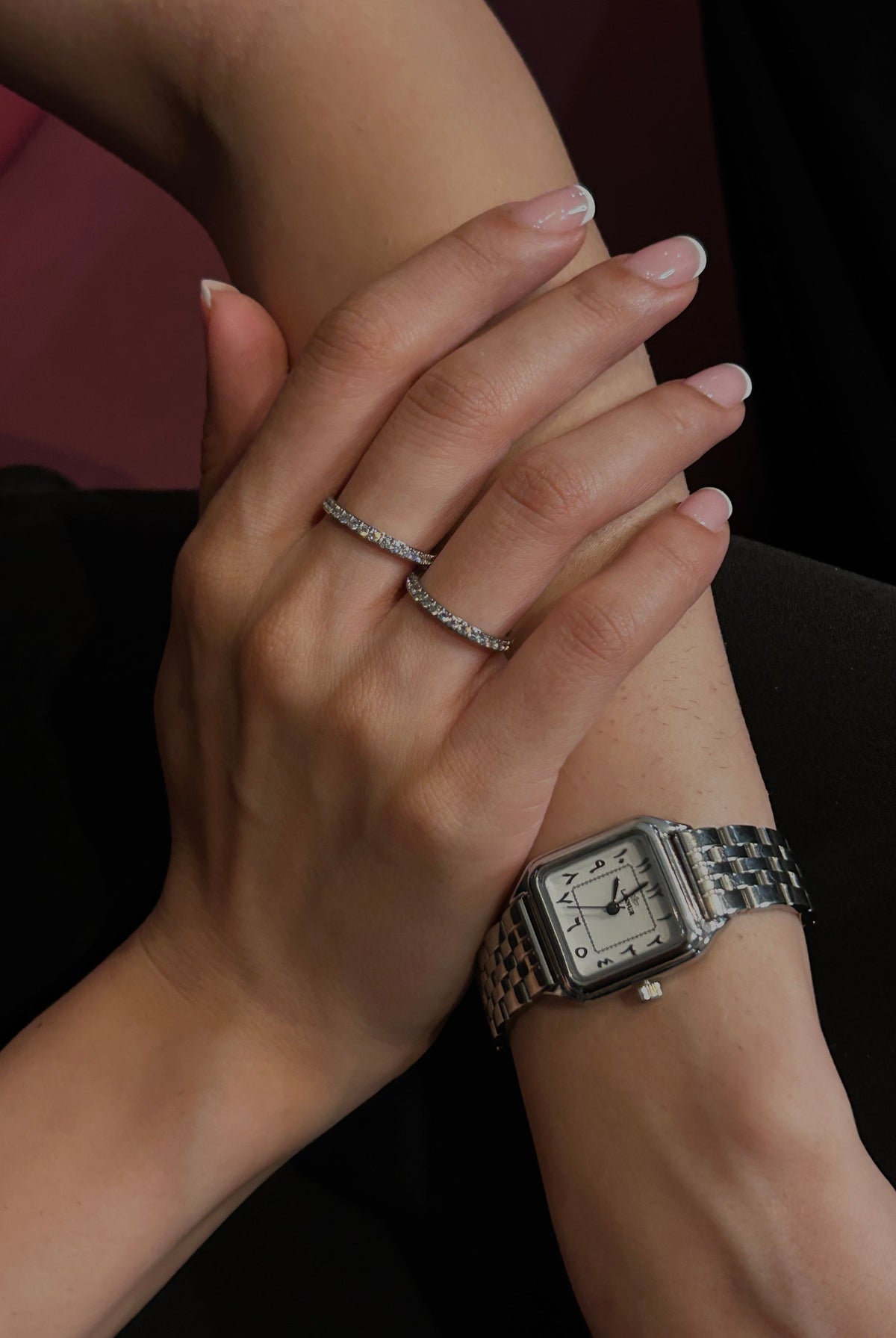
"Arabic numeral watch" can mean two different things. Most Western watches already use Arabic numerals: 1, 2, 3. The watches people are actually searching for use Eastern Arabic numerals: ١ ٢ ٣. These are the numerals still used across much of the Arab world.
Check the product photos closely. Some listings call a watch "Arabic" because of a pattern or a crescent on the dial, not the numerals. If you want the numerals, make sure they're printed or applied as the hour markers. For the history behind them, read What Do Arabic Numerals on a Watch Mean?
2. How the gold goes on
Almost no gold watch at this price is solid gold. What matters is the plating.
- Standard gold plating is a thin layer of gold on base metal. It wears fastest at the clasp and the edges of the case.
- IPG (ion-plated gold) bonds the colour to the metal more tightly than traditional plating.
- A titanium nitride (TiN) base under the gold is harder again. The TiN takes most of the wear, and the gold on top is mainly the colour.
Any plated watch will eventually show wear where it rubs. Better construction just pushes that point further out. Be wary of anyone promising gold plating that "never fades."
3. The glass
- Mineral glass is standard. It scratches more easily.
- Sapphire crystal is much harder and stays clear for years. With an anti-reflective (AR) coating, the dial is easier to read in sunlight.
On a dial designed around its numerals, sapphire is worth paying for.
4. The case metal
- Zinc alloy is light and holds shape and plating well, but it's softer than steel.
- 304 stainless steel is the common watch standard. It's durable and corrosion resistant.
- 316L stainless steel is the higher grade. It's more corrosion resistant, a better base for plating, and the metal most used in higher-end watches.
5. Size and fit
Women's watches run from petite (under 26mm) to standard (28–34mm). A petite case sits like jewellery and pairs with bracelets. A larger case reads more like a statement. On a smaller case, check that the numerals are still crisp enough to read at a glance. Also check whether the bracelet can be sized at home. If it can't, budget for a jeweller.
6. Water resistance
3 ATM (30m) means splash resistant: handwashing and rain. It isn't for swimming. 5 ATM (50m) handles showers and brief immersion. Take the watch off before the pool.
Our picks
Amira — gold
Amira is the watch our customers wear every day. It has a petite 22.8mm case that sits like a bracelet, an Eastern Arabic numeral dial, and a sapphire crystal with AR coating. The gold is IPG over a titanium nitride base, which is harder than standard gold plating. Movement is Japanese quartz, water resistance is 3 ATM, and it comes with a 2-year warranty. Every box includes an adjustment tool, so you can size the bracelet at home.
Coming December — the first all-316L LANNUR
Our next women's watch is built in 316L stainless steel throughout, with sapphire crystal and a Ronda Swiss quartz movement. It comes in gold and two-tone. Subscribers see it first. Sign up at the bottom of this page.
Quick checklist
- Eastern Arabic numerals (١ ٢ ٣) as the hour markers, not decoration
- IPG, ideally over a TiN base, not basic plating
- Sapphire crystal, ideally with AR coating
- 304 or 316L stainless steel for durability
- A warranty of at least 2 years
- A bracelet you can size at home
Free express shipping on all LANNUR watches, worldwide.